

Light fishing, a thriving illegality in Ada
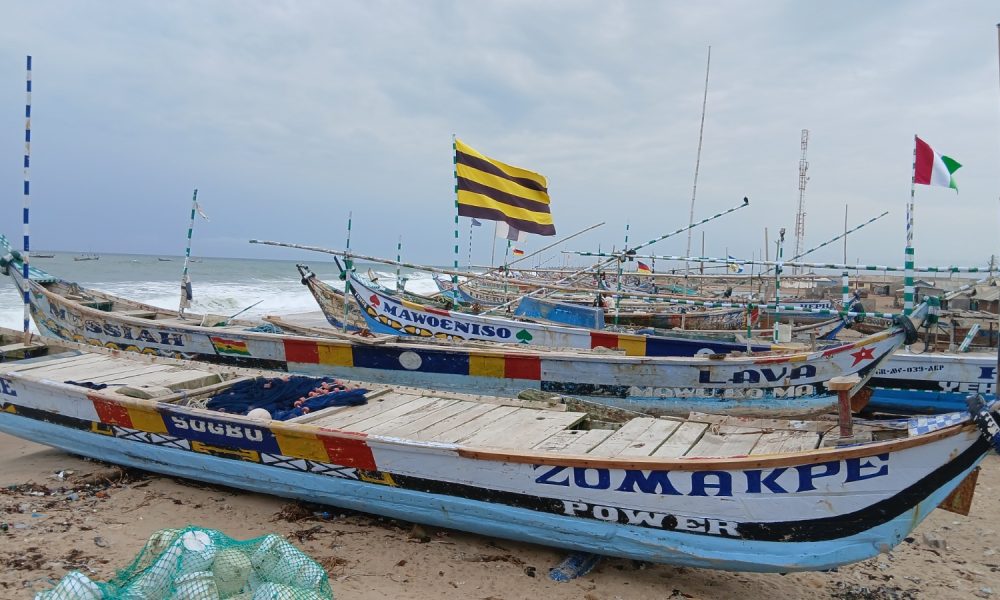
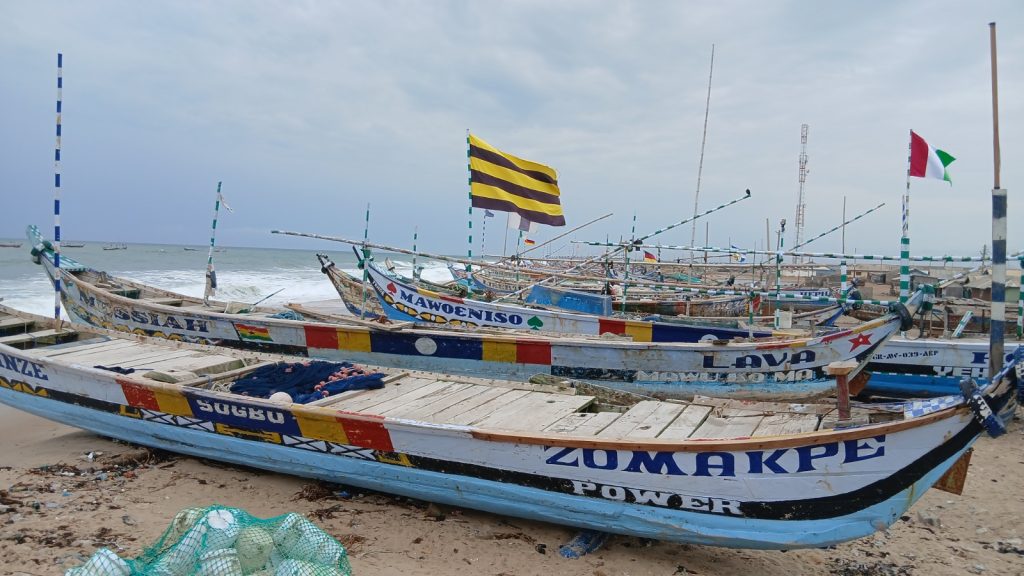
Despite the negative effects of light fishing on the marine ecosystem, the prohibited practice is still rife in three coastal regions and in Ada, a major coastal community in the Greater Accra region, where fishing remains a dominant occupation.
Fishermen in nearly all eighteen (18) landing beaches in the Ada East and West districts are neck deep in the unsustainable practice.
The phenomenon, which was introduced in the Ada area from Tema about fifteen years ago, has become the preferred fishing method due to the regular bumper harvest and its profitable nature.
About Light Fishing
Light fishing is the practice of submerging high-intensity artificial lights or bulbs (often over 2,000 watts) into the sea to aggregate and ensnare fish at night.
Classified as one of the Illegal, Unregulated and Unreported (IUU) fishing methods, the practice results in overfishing and bycatch, and consequently the depletion of small pelagic stocks, juvenile fish and untargeted ones.
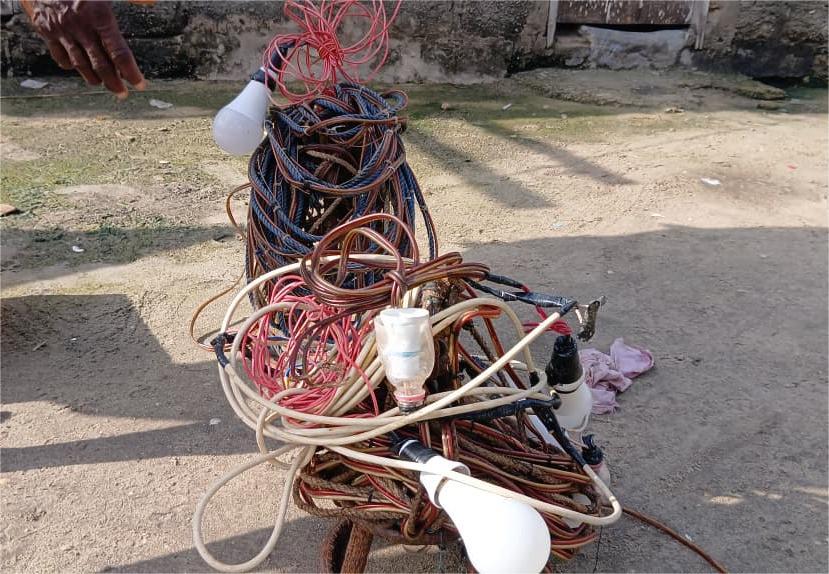
Because of the indiscriminate nature of the method, vast quantities of fingerlings and juvenile fish are caught in the process, and this impedes the ability of the aquatic population to spawn and recover in good time, posing a great deal of avoidable ecological threat to the marine ecosystem.
The effects of the phenomenon
As an infraction, the use of artificial light to aggregate both adult and juvenile fish results in the mass harvest of immature stocks before they can reproduce, disrupting the breeding cycle.
The indiscriminate nature of the practice also results in bycatch (the capture of untargeted and sometimes non-edible species), which are subsequently discarded, dead or alive. This adversely affects the marine ecosystem.
Aside from the above, it cripples the livelihoods of the artisanal fishers who comply with the directive to eschew the practice. While the non-compliant ones make bumper harvests, the law-abiding ones suffer low catches with attendant economic hardship, which pushes them back into illegal practice.
The prohibition of illegal, unreported, and unregulated fishing
Section 2 of Article 49 of the Fisheries and Aquatic Act, 2025, Act 1146 prohibits fishing activities conducted in a manner inconsistent with the responsibilities of the Republic or the conservation of living marine resources under international laws.
Section 3 (a) of Article 49 indicates that a person who undertakes any of the activities identified as Illegal, Unreported, and Unregulated fishing under subsection (2) commits an offence and is liable on a summary conviction to a fine of not less than one thousand penalty units and not more than ten thousand penalty units, in the case of an artisanal or semi-industrial fishing vessel.
For a second-time offender, the person shall be liable on a summary conviction to a fine of not less than one thousand penalty units and not more than ten thousand penalty units in addition to the suspension of the license or authorization of the person for a period of not more than six months.
Where the person commits the offence for a third time or serially, the person shall be liable on a summary conviction to a fine of not less than one thousand penalty units and not more than ten thousand penalty units in addition to the revocation of the license or authorization for the period granted.
According to the law, the fishing vessel shall also be deleted from the Ghana Shipping Registry by the Ghana Maritime Authority (GMA), and the name of the vessel shall be published in the IUU list or register of the Regional Fisheries Management Organisation.
Interview with the Fisheries Commission
The Zonal Manager of the Fisheries Commission, in charge of the Ada East District in the Greater Accra Region, Mr. Edem Adzaku, noted in an interview that the open-access nature of the sea was making the fight against these Illegal, Unregulated, and Unreported (IUU) fishing practices challenging.
He indicated that of these prohibited practices, such as chemical fishing, the use of monofilament nets, etc., light fishing was most prevalent in the Ada enclave and in high practice across nearly all the eighteen landing beaches apart from Azizanya, where more of the fishers are voluntarily complying.
Interview with fisherfolk
Speaking on the phenomenon, Nene Raymond Abayateye II, Chairman of the Ghana National Fishermen Council (GNFC), who doubles as the Chief Fisherman for Anyamam community (landing beach), refuted the assertion that light fishing was a harmful practice and noted that banning it would throw the fisherfolk from what is proving to be a profitable venture into an unbearable hardship with far more disastrous consequences.
A fisherman from Akplabanya who identified himself as Jonathan Kartey shared a similar sentiment. He contended that the practice was not as harmful as being portrayed, adding that a strict enforcement of the law would have grave economic consequences for the fishing community.

No Comment! Be the first one.